Three Shapes of Resistance Band and the Curves They Produce
 7 min read
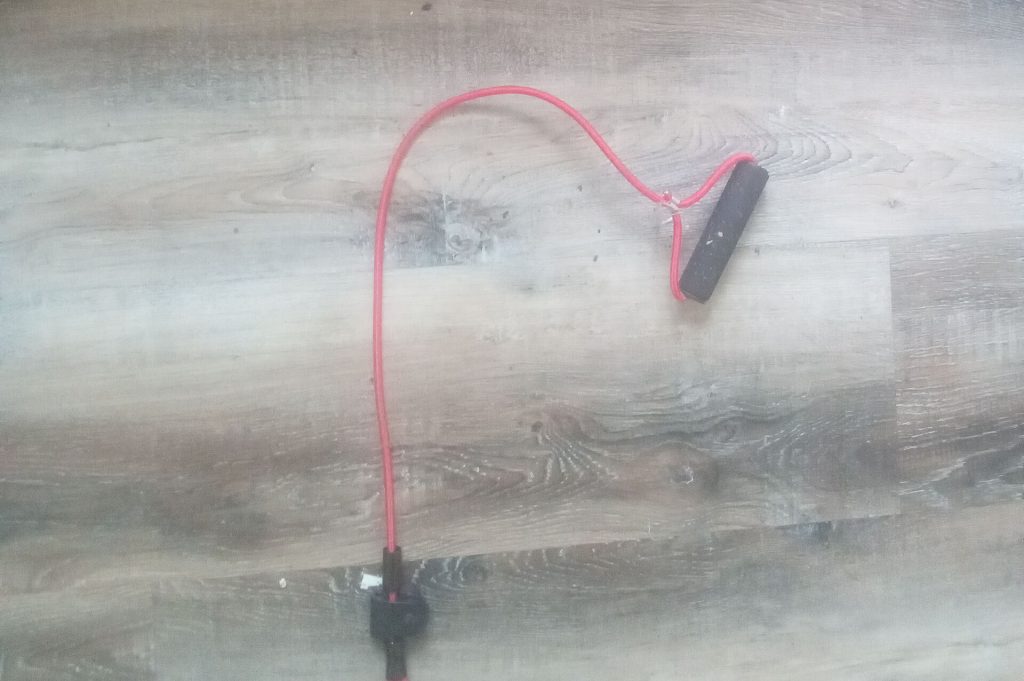
The colour of a resistance band is not the specification that matters, even though it is the one most buyers compare. Bands are usually ranked by how heavy they feel in the hand, which ignores the thing that actually determines how they load a joint: the resistance curve produced by stretching an elastic of a given length and cross-section.
Loop bands, tube bands with handles, and flat therapy bands are three different tools that happen to share a material. They differ in where the resistance starts, how quickly it climbs, whether they can be anchored, and what happens at the end range where most mobility work actually lives.
The comparison below treats each shape as a loading profile rather than a product category. It covers the curve each one produces, the movements each one suits, and the point where the wrong shape quietly turns a good exercise into a bad one.
The Shape Sets the Curve
Every elastic band produces resistance that rises as it stretches. The rate of that rise depends on the band’s resting length, its width, and how much of it you are stretching. A short, thick loop stretched a little produces a sharp climb; a long, thin flat band stretched the same distance produces a gentle one.
This is why two bands sold as the same resistance can feel completely different in use. The number printed on the band usually describes force at a specific elongation, which tells you nothing about the first part of the range where the joint is most vulnerable. The curve matters more than the peak.
Loop Bands and Constant Tension
A loop band is a closed circle, so it is always under some tension the moment it is in place. That makes it excellent for hip work, where the band sits above the knees or around the ankles and the joint never returns to zero load. Lateral walks, clamshells, and terminal knee extensions all benefit from this property.
The same property makes loops a poor choice for pressing or pulling patterns. Because the band never unloads, the bottom of the movement is not truly a starting position, and the range is limited by the loop’s circumference rather than by the joint. Long-limbed users often find loops too short to reach useful end range.
Tube Bands and the Handle Problem
Tube bands add handles, which makes gripping easy and lets the hand stay relaxed under load. That is a genuine advantage for rows, presses, and rotation work, where a closed fist on a loop band fatigues the forearm before the target muscle is challenged. Handles also make the band easier to anchor at chest height.
The cost is that handles define the attachment point rigidly. You cannot easily wrap a tube around a thigh, and the handle creates a hard stop at the end of the range. For mobility work that wants a soft, continuous pull, the handle is a constraint rather than a convenience.
Flat Bands and Anchoring
A flat band is an open strip, which makes it the most versatile shape for anchoring. It can be tied to a post, looped through a door gap, held under a foot, or wrapped around a limb at any point along its length. That freedom is why clinics use it for shoulder and ankle work.
The trade is that a flat band has no structure of its own. It twists, it rolls, and it can bunch under load, which changes the effective width and therefore the resistance. It also has no handle and no loop, so grip becomes the limiting factor unless you knot it or wrap it around the hand.
Why the Printed Numbers Do Not Transfer
Bands are labelled by colour or by a resistance figure, and neither travels well between shapes. A medium loop and a medium flat band are not comparable, because the loop is pre-tensioned and the flat band is not. Even within one shape, the number usually refers to a stretch distance that no exercise repeats exactly.
The practical answer is to judge by feel at the position where you need the load. If the band is already pulling hard at the start of the movement, it is too short or too heavy for that joint. If it only becomes meaningful at the very end, it is too light for the range you are training.
Where Each Shape Fails
Loops fail in pressing patterns and in anyone with a long wingspan. Tubes fail in anything that needs wrapping, including most hip and ankle work. Flat bands fail wherever grip is the weak link, and they fail at high tension because the material bunches and the load becomes unpredictable.
There is also a durability pattern worth knowing. Tubes tend to fail at the junction where the handle meets the rubber, loops tend to fail at the seam, and flat bands tend to fail along an edge nick. Inspecting those three points before a heavy set is more useful than tracking how many months the band has lasted.
Matching Shape to Movement
For hip and knee stability, a loop is the right default because the tension never disappears. For upper body pulling and pressing, a tube with handles keeps the grip out of the equation. For shoulder rotation, ankle dorsiflexion, and anything anchored to a fixed point, a flat band gives the cleanest line of pull.
That mapping means a single shape cannot cover a full routine well. A small loop, one tube, and one flat band cover almost every joint in the body, and each costs less than a single pair of adjustable dumbbells. Buying three shapes is cheaper than buying three strengths of one shape and finding two of them unusable.
Length, Not Just Resistance
Length is the specification buyers ignore, and it decides which exercises are physically possible. A short loop is fine above the knees but useless for overhead work. A long flat band can be doubled to shorten it, which effectively gives two resistance levels from one strip.
When in doubt, buy longer and plan to choke up on it. A long band can always be made shorter by knotting or doubling, while a short band cannot be made longer, and the shortfall only becomes obvious once you are already in the movement.
Width is the other half of the same calculation. A wide band at low elongation can produce the same force as a narrow band stretched much further, which matters because the narrow band must be shorter to reach that force. A set that varies width as well as length covers more usable range than a set that only changes colour.
Shape also determines how a band behaves at end range, which is exactly where mobility work spends its time. A band that keeps pulling harder as the joint opens teaches a very different lesson than one that holds steady, and the nervous system notices the difference even when the muscle does not.
That question of what happens at end range connects directly to stretching, where the timing of the input matters as much as the tool applying it. Whether a stretch belongs before or after training is a separate decision, and it has a measurable cost attached.