Shared Buildings: Structure-Borne Noise Versus Airborne Noise
 7 min read
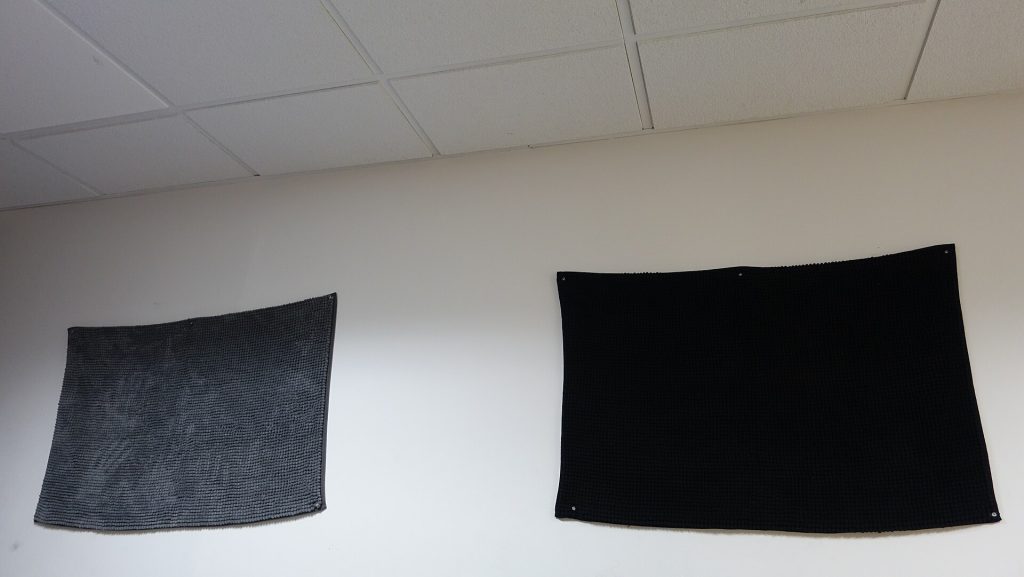
The common assumption is that a mat solves gym noise in a flat, and it does solve exactly one kind: the slap of a dropped dumbbell on a hard floor. It does almost nothing for the low thump that reaches the flat below, which travels through the building rather than through the air.
These are two different paths with two different physics. Airborne sound is blocked by mass and by sealing gaps. Structure-borne vibration is carried by solid contact and re-radiated by large surfaces, which is why it can surface three floors away from the source.
Knowing which of your lifts produce which is most of the argument, and the rest is the small number of interventions that actually work on each path.
Two paths, two sets of fixes
Airborne noise travels from a surface into the air of the room, then through a wall or floor assembly, then into the neighbour’s air. Mass, absorption and airtightness all reduce it.
Structure-borne noise enters the building frame directly at the point of impact, then travels metres or tens of metres through concrete and steel before radiating off a ceiling somewhere else.
Because the paths differ, the fixes differ and do not substitute for each other. A heavy curtain helps one and is irrelevant to the other; a resilient pad helps the other and does nothing for the first.
What the neighbour actually hears
Impact noise in a concrete building arrives as a low-frequency rumble between roughly 30 and 80 Hz, often felt rather than heard. It reads as a dull boom with no obvious direction.
That frequency range is the hardest to attenuate, because low frequencies need mass and depth. Thin foam, egg-crate panels and rugs barely register at 50 Hz.
It is also why neighbours describe the sound as mysterious. They hear a thump from above that does not match anything they can see happening in the flat.
Airborne sources: clanking, talking, dropping
Plates touching each other, collars sliding on a bar, a dumbbell set down on tile, a rope hitting the floor. These produce broadband sound that travels through the room and through the party wall.
They are the easiest to reduce, because the fix is usually proximity and material: rubber-coated plates, a mat, collars that fit, and setting weights down rather than letting them land.
Music and vocal effort belong here too, and in a shared building the volume of the session is often more annoying than its weight.
Structure-borne sources: the floor as a drum
Dropping a loaded bar, jumping, landing a burpee, swinging a kettlebell and setting it down hard. Anything that delivers an impulse into the slab couples directly into the building.
A barbell dropped from lockout is the worst case in a home setting, because the mass is high and the contact area is two small plate edges. The energy goes into a few square centimetres of floor.
Jumping is second. It is low mass but repeated, at about two impacts per second, and repetition is what turns a tolerable noise into a complaint.
Why drops are worse than heavy loads
A 100 kg squat held statically pushes the floor gently and continuously, and the slab barely notices. The same 100 kg arriving from knee height delivers the same energy in a few milliseconds.
Power is energy over time, so a short contact time means a large instantaneous force and a large low-frequency component. That is the part that travels.
The practical consequence is that you can train heavy in a flat and still be quiet, as long as nothing lands. Control at the bottom of a rep buys more goodwill than any mat.
Timing beats damping
Most noise complaints are about unpredictability rather than volume. A session at the same hour every day becomes background; a session at random hours becomes a grievance.
Quiet hours in most buildings run from late evening to early morning, and the two hours either side are the sensitive ones. Moving a session to late afternoon removes most of the friction at zero cost.
Telling the neighbour the schedule in advance, before they complain, converts a noise problem into a courtesy. That conversation is worth more than 30 mm of rubber.
What mats can and cannot do
A mat works by decoupling: it inserts a soft layer so the impact is spread over more time. That reduces the high-frequency content effectively and the low-frequency content only slightly.
Thin foam compresses to nothing under a loaded bar and stops decoupling entirely. Crumb rubber of 15 to 30 mm works better, and a mass layer such as plywood on top of it works better still, because the assembly becomes mass on a spring.
No mat makes a dropped barbell acceptable in a timber-framed building. It reduces the complaint; it does not remove the mechanism.
The building sets the ceiling on what is possible
A 200 mm concrete slab with a floating screed isolates impact well. Timber joists with a plasterboard ceiling and no resilient layer transmit almost everything, and no tenant-level intervention fixes that.
Knowing which you have changes the program. On a concrete slab, controlled lifting and a mat are enough. On timber joists, the plan should avoid impacts altogether and lean on rows, presses, tempo work and bands.
You can test roughly by having someone walk heavily in shoes while you listen below, or by asking the building manager what the floor assembly is.
Quiet lifts and the program built around them
Rows, presses, tempo squats, split squats, band work and isometrics put almost no impulse into the floor. A demanding session can be assembled from those alone, with nothing leaving the ground and nothing landing.
What you lose is eccentric loading at speed and every movement that requires a jump. That is a real loss for power development and a modest one for general strength, which is what most apartment lifters are actually chasing.
If jumping or weightlifting matters to your program, the honest answer is a gym membership for those two sessions a week rather than a mat pretending to solve the problem at home.
The compensation is volume. Quiet lifts tolerate more sets, and more sets at moderate load build most of what a small flat can realistically support over a year.
Rugs, soft furnishing and the room’s own absorption
A bare room with hard floors reflects sound, so the neighbour hears a longer and louder event than the same work in a carpeted room with a sofa and curtains. Soft furnishing buys a few decibels for nothing at all.
None of it touches structure-borne sound, which is the distinction worth keeping straight. Buying a rug to fix a floor thump is money spent on the wrong path entirely.
The one overlap is a thick rug under the training area, which softens the airborne slap of a weight being set down and slightly decouples light impacts. It is a useful second layer rather than a solution.
Bookshelves packed with books outperform purpose-made acoustic panels in a rented flat, cost less, and do something useful for the room besides.
Quiet training is a programming problem before it is an equipment problem, and the exercises that are genuinely silent are also the ones that tolerate high volume. Working out which lifts you can do at nine in the evening without thinking about the floor is the next useful step.
That list tends to be longer than people expect, and it is the one that keeps a shared building liveable.