Living Room Sessions: Furniture Routes and Floor Protection
 7 min read
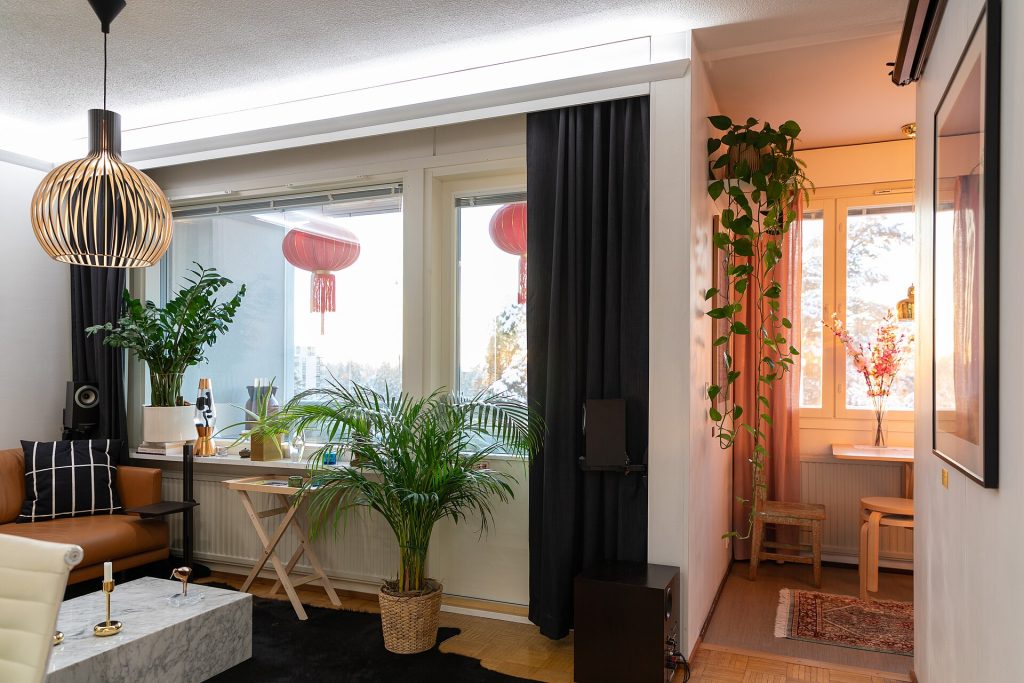
Moving the sofa is usually treated as a warm-up before training, and in a small flat it is the main event. The real cost of a living room session is not the lifting; it is the two furniture moves at either end of it.
That cost is paid in a currency most equipment advice ignores: minutes, goodwill and floor condition. A route that takes ninety seconds twice a day is a different proposition from one that takes six minutes and needs a second person.
The comparison below follows the route rather than the equipment list, because the route is what decides whether the equipment gets used at all.
The route is the real cost of the session
Every object between the storage point and the training point adds a movement, and every doorway adds a turn. A sofa pulled 40 cm to clear a mat sounds trivial until it happens 150 times a year.
The route also has a social dimension. In a shared flat, the distance you walk with a bench is the distance everyone else can see you rearranging their home, and that visibility is what produces friction.
The shortest useful route is a straight line of 2 m with no threshold. Anything with a right angle or a rug edge in it costs extra, and the cost is paid twice per session rather than once.
Map the path once, on paper
Draw the room, mark the storage position and the training position, then count the moves between them. Most people find four or five, of which two are avoidable by shifting the storage point 1 m.
Mark the door swings as pies on the plan. A door that opens into your training area is a wall you cannot use, and it is often the reason a room feels 20 percent smaller than its dimensions suggest.
The plan is also a negotiation document. Showing a flatmate where a bench will stand, rather than announcing it, converts an argument about space into a discussion about a rectangle.
Which furniture can move daily and which cannot
A coffee table, a floor lamp and an ottoman move easily. A sofa, a bookshelf and anything with a cable behind it do not, because moving them means disconnecting, dragging and realigning something that was settled.
The practical rule is that anything requiring two hands and a lift out of contact with the floor is permanent. It will move once, on the day it arrives, and then never again.
Design the route around the permanent objects rather than hoping to move them. A room where the sofa has to shift is a room with a training area the size of the gap you did not plan for.
Sliders, felt and the grit problem
Felt pads slide beautifully on hard floors for about three weeks. After that they collect grit, and the grit becomes an abrasive sheet that polishes a dull track into the finish.
Plastic sliders work better on carpet, felt works better on tile, and neither lasts forever. The cheap compromise is a felt pad with a plastic cup around it, which glides on both and is easy to inspect.
Lift, do not drag, is the rule that saves floors. A 20 cm lift on a coffee table costs one second and prevents the scratch that no deposit will forgive.
Floor protection by load type
Three different jobs get confused: protecting from abrasion, protecting from point loads and protecting from drops. A rug does the first, plywood does the second, and rubber does the third.
For a bench or a stand, a rug plus a plywood sheet under the feet spreads the load. For dumbbells, interlocking rubber of 15 mm is the sensible minimum, and thicker only helps the drop rather than the floor.
Rubber laid directly on sealed wood can leave a stain through plasticiser migration, especially in warm rooms. A thin cotton layer underneath prevents most of it, and costs nothing.
The coffee table problem
The coffee table is usually the heaviest object in the middle of the room and the one most in the way. It also tends to be the object people are least willing to move, because it anchors the whole seating arrangement.
Replacing one large table with two nesting tables changes the arithmetic. Each half is liftable with one hand, and half the surface is enough for a laptop and a cup while the other half is out of the way.
Where the table must stay, treat its footprint as fixed and plan the training area around it, then choose exercises that fit the remaining rectangle rather than fighting for the whole floor.
The exit ritual
Putting the room back is the part that gets skipped, and it is the part that determines whether the arrangement survives a month. A reset that takes more than ninety seconds will be deferred, and deferred resets accumulate into a room that stays rearranged.
The ritual should be one trip, in a fixed order, ending with the floor clear. Written down once and repeated, it becomes faster than deciding each time.
Leaving one object out is often the right compromise: the mat stays, everything else goes. It keeps the room looking lived in rather than converted.
Shared rooms and the negotiation
In a shared flat the constraint is not area but consent. A schedule agreed in advance removes most of the conflict, because the objection is usually to surprise rather than to training.
Two fixed windows a week, at hours when the room is normally empty, work better than daily improvisation. They also make the noise predictable, which is the part neighbours and flatmates care about.
Owning the reset is part of the deal. The person who trains moves the furniture back, every time, without being asked.
Studio flats: when one room does everything
In a studio there is no second room to retreat to, so the training area is also the bedroom, the kitchen table and the place guests sit. That raises the standard for the reset from tidy to invisible.
It also raises the cost of noise and warmth. A session at nine in the evening leaves the room used and humid, and in 25 m² that is the whole flat rather than one corner of it.
The arrangement that works is a training zone that is never fully dismantled: a mat rolled against the wall, weights under the bed, a bench that doubles as seating. The room stays a room because nothing arrives in a bag.
Where that is impossible, the honest conclusion is that a studio supports bands, bodyweight and one kettlebell, and the heavy work happens somewhere else.
When the living room is the wrong room
If the route needs more than three moves, or if the reset cannot be done in ninety seconds, the living room is the wrong choice regardless of its size. A bedroom with 4 m² of clear floor is a better gym than a living room with 8 m² and a sofa in the middle.
Hallways and balconies sometimes work better for the small items even when the main room is bigger, because nobody has to walk around you.
The measurement that matters is clear floor with the door shut, not total floor area. Once the room has been mapped that way, the next question is what can be fixed to its walls without a drill.
Renters face that question immediately, and the answers are more limited than the hardware shops suggest.