Balcony Training: Load Limits, Sun and Railing Height
 7 min read
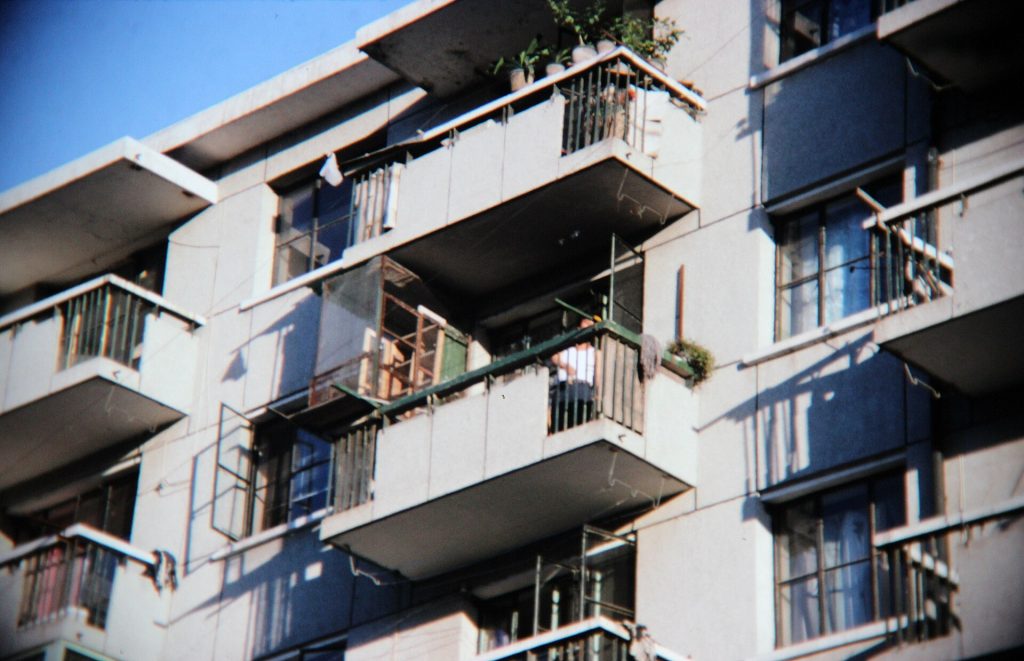
A balcony reads as free extra floor, and it is the one part of a flat with a published load limit and no walls to push against. Treating it as an outdoor gym is a reasonable idea that fails on three specific details.
The slab is designed for people standing on it, not for a rack and 150 kg of plates concentrated in one corner. Sun degrades everything flexible, and the railing is a guard, not an anchor.
None of that rules out training outdoors. It rules out a particular kind of training, and the list below is about which kind survives contact with the reality of a slab.
The slab is not the ground
A cantilevered balcony carries load back into the building through its connection, and the design live load is typically in the range of 200 to 300 kg per square meter. That figure is averaged over the whole surface, not guaranteed at any single point.
A supported balcony over a wall or column behaves better, and a ground-floor terrace is effectively a slab on grade with no limit worth worrying about. Which one you have changes everything.
You can usually tell by looking underneath, or by asking the building manager. Guessing from the outside is how people end up with a cracked soffit and an awkward conversation.
Load arithmetic in practice
Add it up once: a light rack at 60 kg, 100 kg of plates, a bench at 25 kg and an 80 kg lifter comes to 265 kg. On a 1.5 m² footprint that is 177 kg per square meter, comfortably inside the limit.
Then look at the point loads. Four rack feet carrying 160 kg put 40 kg on each contact patch, and a dropped bar puts a multiple of that through two plate edges.
Averaged load is usually fine; concentrated and dynamic load is what cracks screed and tile. Distributing with a plywood sheet fixes the first and only softens the second.
Railing height and the fall risk
Balcony guardrails run about 1.0 to 1.1 m, which is roughly hip height on an adult. That is a guard against leaning, not a barrier against a loss of balance under load.
Any movement that puts your centre of mass above the rail, or that involves stepping backward, is a bad choice out there. Rows and presses are fine; anything with a stumble is not.
Hanging a bar or a strap from a railing is worse than it looks. The rail is designed for a horizontal push at mid-height, not for a vertical pull from above, and the fixings are usually the weak point.
Sun, heat and surface temperature
Black rubber matting in direct summer sun reaches 60 to 70 C, which is hot enough to soften some compounds and to make bare feet and hands unpleasant. It also accelerates UV degradation of bands and straps.
Rubber crumb mats fade, chalk, and can leave marks on a light balcony floor. A lighter-coloured mat runs cooler and hides less heat damage.
Bands stored on a sunny balcony fail at the point where they are looped, usually within a season. Store them indoors and bring them out, which is also how you avoid finding them brittle in spring.
Wind
Mats, towels, resistance bands and empty water bottles all become sails on a balcony, and the wind at the fourth floor is stronger than at street level. Anything light enough to lift will eventually leave.
Weighted mats and a storage box solve it, and so does not leaving anything out. A rolled mat wedged behind a planter is a temporary fix that fails on the first gusty night.
Wind also matters for a bar. A bar left on a stand outdoors will be blown over, and a falling bar from a balcony is a serious event rather than an inconvenience.
Sound from a balcony
A balcony is acoustically open, which people read as quiet. It is the opposite: sound radiates outward and downward into a courtyard that reflects it back, so a conversation carries further than it would indoors.
Dropped weights are worse. The impact goes into the slab and then into the building, and it also produces a sharp airborne crack that the whole courtyard hears.
What a balcony does remove is the ceiling-above-neighbour problem for airborne noise. That is a genuine advantage for a rower or a bike, and no advantage at all for anything dropped.
Moisture, salt and steel
Outdoor air carries moisture, and coastal air carries salt. Both attack painted steel at scratches and at welded joints, and both attack the springs inside anything mechanical.
Cast iron plates stored outdoors rust on the exposed faces within weeks, and the rust transfers to hands, flooring and clothes. If plates must live outside, a sealed box is not optional.
Condensation is the quieter problem. Metal brought from a cold balcony into a warm flat sweats, and that moisture ends up in the bar knurling and the rack joints rather than on the floor.
What a balcony is genuinely good for
Bands, a suspension trainer on a proper anchor, mobility work, skipping if the slab allows it, and any session that needs fresh air more than it needs load. That is a real training space, just a narrow one.
It is also the best storage in most flats for anything that can tolerate temperature swings and cannot tolerate being indoors: a sandbag, a weighted vest, a plyo box.
Treating the balcony as an extension of the indoor setup rather than a replacement gets the most out of it, because the two spaces fail in opposite directions.
What it cannot do is hold a heavy session, and no arrangement of mats changes that. The slab has a limit, the rail has a job, and the weather has an opinion.
A three-season space at best
A balcony works for about eight months in a mild climate and about four in a cold one. The limiting factors are surface temperature in summer and grip in winter, not rain.
Cold rubber is hard and slippery, bare metal handles are unpleasant without gloves, and bands stiffen enough to change their resistance. None of that stops a session; all of it shortens one.
The realistic pattern is to treat the balcony as a summer extension and a winter store, which is the opposite of how it gets planned in the first warm week of the year.
Planning for three seasons rather than four also changes what you buy. A rack that lives out there is wasted for a third of the year; bands and a sandbag are not.
Rules, leases and the ceiling above
Many leases prohibit storage or equipment on balconies, and many buildings prohibit anything that changes the appearance of the facade. A rack left out is visible from the street and from every neighbouring window.
There is also the ceiling question. A balcony with a slab above it has a height limit that rules out overhead work, and one open to the sky has no such limit until it rains.
Reading the lease before buying is cheaper than reading it after a complaint. The next question is what a kit has to weigh to be worth carrying out there at all, which is the same question that governs travel.
Portability and balcony training are the same problem in different clothing.