The Portable Kit: Six Items That Survive Travel and a Move
 7 min read
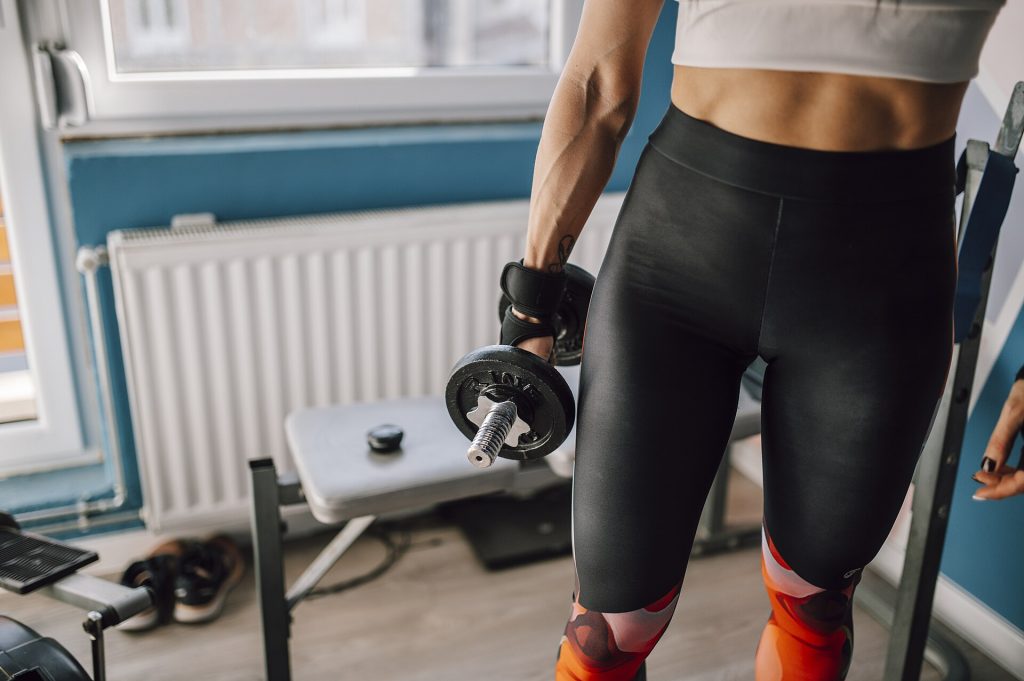
Portable kits are usually assembled by buying the lightest version of everything, which produces a bag that is light and nearly useless. The binding constraint is not weight on its own but the load ceiling you are willing to give up.
A kit that fits in 30 litres and weighs under 10 kg can cover a surprising amount of training, provided you accept that the lower body will be trained with unilateral work and that progression will come from reps rather than plates.
The six items below are ordered by how much they return per gram, and the last section is about what none of them can do.
A budget in kilos and litres
Ten kilograms and 30 litres is the realistic ceiling for something you will carry on a train, put in a car boot, or check as luggage without resenting it. Past that, the kit stops travelling and starts being shipped.
Divide the budget deliberately: about 3 kg for resistance, 2 kg for anchoring, 2 kg for the small tools, and 3 kg of slack for shoes and a towel. Kits that fail usually fail because the slack was spent on a third band.
Volume matters as much as mass. A 5 kg sandbag fills more space than a 5 kg dumbbell, and a coil of rope takes the shape of whatever it is packed against.
Bands: the best return per gram
Three loop bands of different thickness weigh under a kilogram together and can produce resistances from a few kilos to well over 40 kg when stacked. Nothing else in the kit comes close on that ratio.
The limitation is the resistance curve. Band tension rises through the range, so the hardest point is the lockout, which is backwards for a squat and roughly right for a press.
Check bands for nicks before every session, especially where they were looped around something abrasive. A band that fails under tension releases stored energy toward your face, which is the one genuine hazard in the kit.
A suspension trainer
A strap-and-handle trainer weighs around 0.7 kg and turns any solid anchor into a gym: rows, presses, fallouts, split squats. It scales by body angle, so the same strap covers beginner and advanced positions.
Its ceiling is the anchor rather than the strap. A door, a beam, a tree branch or a playground frame all work, and a hotel wardrobe does not.
The learning curve is real. Stability demands make the first sessions much harder than the equivalent barbell work, which is a feature for some programs and a frustration for others.
Adjustable dumbbells and the ceiling problem
A pair of adjustable dumbbells at 24 kg each is 48 kg of luggage, which is not portable by any definition that involves stairs. The travel version of this item is a 10 kg pair, or a water-fillable bag that weighs nothing empty.
Water bags solve the travel problem and introduce a new one: they are unstable, awkward to fill, and unpleasant to train with above shoulder height. They are better than nothing and worse than almost any alternative at home.
For a kit that moves between flats rather than continents, a 20 kg adjustable pair is the sensible compromise. It is heavy enough to matter and light enough to go in a car once a year.
A door anchor and its hostage risk
A strap anchor weighs about 100 g and multiplies the usefulness of every band in the bag. It is the highest-leverage item in the kit by a wide margin.
It also depends entirely on somebody else’s door. Hotels, rented rooms and friends’ flats all have doors, but not all of them have doors you are willing to load, and the hinge side is the only side worth using.
A short loop of webbing as a backup anchor for a beam or a railing covers the cases where the door is hollow, glass, or simply not yours.
Sliders or a towel
Two furniture sliders weigh 200 g and turn a hard floor into a hamstring and core station: sliding leg curls, mountain climbers, plank pull-ins. A folded towel does the same job on smooth flooring for nothing.
The catch is the surface. Sliders need a hard floor, and a towel needs one that is not carpet. In a carpeted hotel room both fail, and the kit loses a whole movement category.
Where they work, they are the cheapest way to load the hamstrings eccentrically without any weight at all, which matters in a kit that has no barbell.
The jump rope and the floor below
A rope is 150 g and delivers conditioning that nothing else in the bag can match. It also needs 30 cm of clearance above your head and a forgiving ceiling, which rules out most hotel rooms.
The floor below is the second constraint. A rope on a timber floor in a rented flat is one of the loudest things a person can do indoors, and no mat fixes a repeated impact at that frequency.
Where those conditions fail, substitute a rope-less version or step-ups on a stair. The conditioning transfers reasonably and the noise does not.
What the kit cannot do
It cannot load the lower body heavily. Belt squats and split squats with bands build real strength, but the ceiling arrives within a few months and then progression has to come from volume, tempo and range.
It cannot teach the skill of heavy barbell work, and it will not prepare anyone for a powerlifting meet. Those are specific goals that need specific equipment, and pretending a kit covers them wastes both money and training time.
It also cannot replace a floor. Every item in the bag assumes a surface, a ceiling and a door, and the quality of those three decides more about the session than the contents do.
Packing is part of the kit
A kit that takes fifteen minutes to pack will be packed once. The bag, the order and the checklist are as much a part of the design as the bands are.
One bag with one pocket per category, packed in the same order every time, is the version that survives a year. Loose items in a rucksack become a search at the start of every session.
The things that get lost are always small: the door anchor, the sliders, the valve adapter for a water bag. Duplicating them costs almost nothing and saves a session on each trip.
Weigh the packed bag once. If it is over 10 kg, something in it is a home item that has been travelling without ever being used.
Buy fewer, better items
A six-item kit works because each item covers a category, not because six is a magic number. Adding a seventh usually duplicates one of the six and adds weight to a bag that already has a budget.
The better upgrade path is replacing, not adding: a thicker band for a thin one, a longer strap for a short one, a heavier dumbbell for a lighter one.
That discipline is the same one that governs a permanent small setup, where every addition has to earn its seconds as well as its shelf. Portability simply makes the arithmetic visible.
Which is the useful thing about a travel kit: it teaches the size of the minimum, and most home gyms are two items larger than they need to be.