Bumper Plates and Cast Iron: Noise, Tolerance, and Longevity
 7 min read
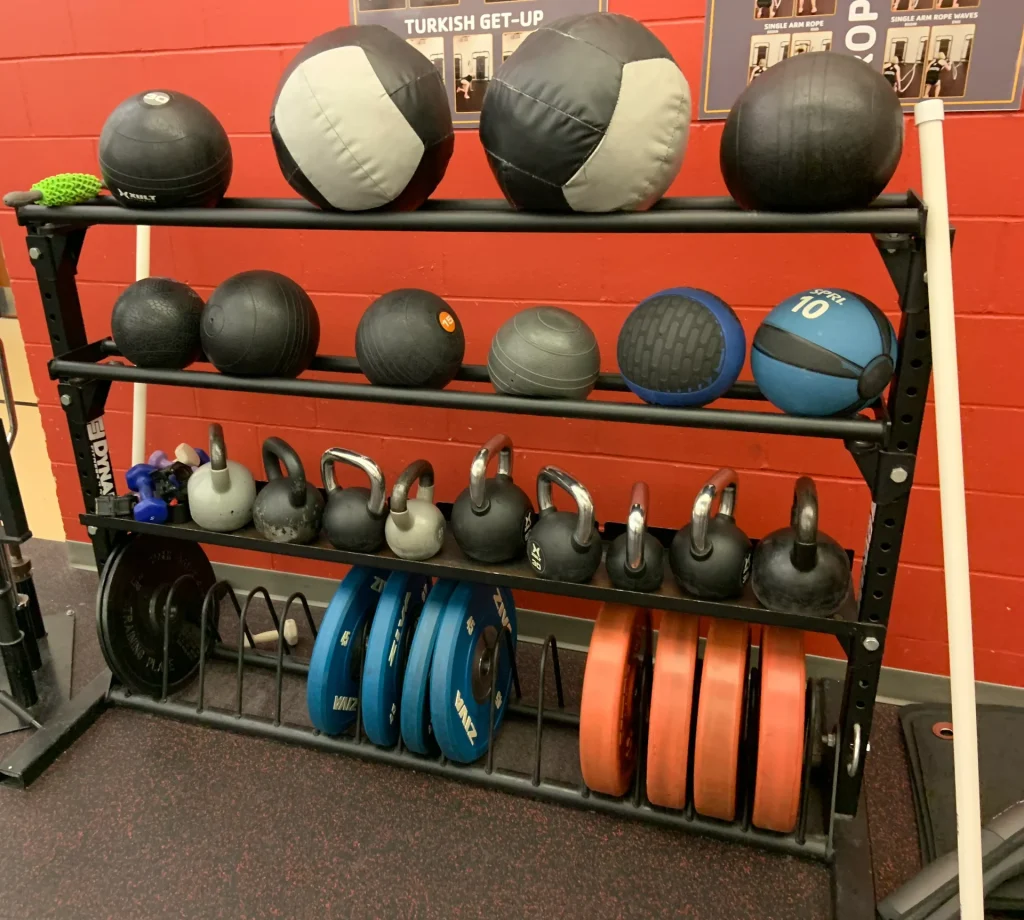
Rubber bumper plates get sold as the quiet, safe, modern choice, which implies cast iron is loud and dangerous. The implication is only half true. Bumper plates absorb a drop from overhead; they do not make a controlled deadlift quieter, and they cost more per kilogram at every size.
The two formats differ in what they are built to survive. Iron is dense, cheap, and dimensionally stable. Rubber is thick, forgiving, and inconsistent in ways that matter once you start counting small increments.
Noise: What Rubber Actually Absorbs
Rubber absorbs impact, not vibration. A bumper plate dropped from overhead is dramatically quieter than iron, because the energy goes into deforming the rubber instead of ringing the floor and the walls. That is the entire mechanism, and it is genuinely effective.
What rubber does change is the consequence of a miss. A failed lift dropped from overhead lands on a plate designed to deform, and the bar stays usable. Iron in the same situation can chip, crack a tile, or both.
Set down under control, both formats are close to silent. Most home gym complaints come from dropped deadlifts and dropped dumbbells, and only the first of those is fixed by bumper plates. Buying bumpers for a controlled deadlift solves a problem you do not have.
The floor matters as much as the plate. A rubber plate on a concrete slab is quiet, while the same plate on a suspended wooden floor transmits a low thump through the joists that no plate design can remove.
Tolerance and True Weight
Cast iron plates are usually accurate to within one or two percent, and good ones far closer. Bumper plates vary more, partly because the rubber formulation changes with temperature and partly because the steel insert takes up volume that would otherwise be metal.
For a lifter adding 2.5 kg per session, a 1 kg error in a 20 kg plate is a real distortion of the program. Weigh your plates once and write the numbers on them, whichever format you buy. That one hour of work makes every later progression honest.
Cheap iron varies as well, usually more at the light end where the casting is thin. A 2.5 kg plate that weighs 2.2 kg turns a planned step into a smaller one, and the error repeats at every load above it.
Durability Under Drops and Static Load
Iron cracks or chips when dropped on a hard floor, and the chip becomes a sharp edge. Bumper plates survive drops but degrade at the insert, where the steel hub meets rubber, and a failing insert is not repairable. The failure modes are different rather than one being absent.
Iron left loaded on a bar for years is fine. Rubber left loaded in one spot for years can take a set, which is a slow deformation rather than a break but changes how the plate sits on the sleeve. Neither failure is likely, and only one is expensive.
Storage conditions decide much of the outcome. Iron in a damp garage rusts at the edges within a season, while a dry room leaves it unchanged for decades. Rubber degrades faster in sunlight than in shade, which matters for a rack near a window.
Thickness and Bar Capacity
A 20 kg bumper plate is roughly twice as thick as the iron equivalent, so a bar that holds six iron plates per side may hold only three bumpers. That limits the top end of a deadlift far earlier than most buyers expect. Sleeve length becomes the binding constraint.
Mixed sets solve this: bumpers on the inside for drop tolerance, thin iron on the outside for load. The combination is common in weightlifting rooms and works well as long as the diameters match. Check the outer diameter before mixing anything.
Outer diameter is the number to check, not thickness. A 450 mm bumper beside a 450 mm iron plate keeps the bar level, while a mixed set with different diameters changes the pull height by several centimeters. That is a different lift.
Dead Bounce and Lift-Off Behavior
Bumper plates bounce. A dropped bar returns upward with enough energy to be worth managing, and on a platform with no give the second bounce can be higher than the first. That rebound changes how a lifter sets up for the next rep.
Iron lands and stays. That predictability is worth something on a deadlift, where a bouncing bar disturbs the rhythm of a set and the position of the next pull. Lifters who train touch-and-go notice the difference immediately.
Bounce also affects the floor beneath. A dead bounce sends its energy into the slab, while a live one returns some of it to the bar. Neither is gentler; they distribute the same load differently in time.
Floor and Platform Requirements
Rubber plates reduce the peak force on the floor but do not eliminate it. A 200 kg drop still needs a platform or dense mats, and a thin mat under bumper plates is a false economy that ends in a cracked slab. The plate protects the bar, not the building.
A platform built from two layers of board and a rubber sheet spreads load better than mats alone. The cost is height, which matters under a low ceiling, and grip, which matters if the sheet goes smooth when damp.
Iron on a garage floor needs the same protection for a different reason: point loading. A single 20 kg plate carries its weight through a small contact patch, and repeated drops concentrate that load in one place until the concrete gives. Mats solve both cases.
Cost and Availability by Weight
Bumpers cost more at every size and the premium grows with weight, because the rubber volume grows faster than the metal core. Small bumper plates are disproportionately expensive relative to their mass, which makes a full set costly at the light end.
Freight changes the ranking at a distance. Iron is heavy and cheap per kilogram, so shipping can exceed the plate price, while rubber is bulky and priced by volume instead. Compare delivered totals rather than shelf prices.
Iron is cheap and available secondhand in almost any quantity, which makes it the practical choice for a lifter who needs 200 kg on a budget and does not drop the bar from overhead. Budget usually settles this argument before physics does.
Second-hand bumpers are the best value in this category when the inserts are intact. Flex the plate slightly and look for a gap between rubber and steel, and reject anything that shows separation. Shipping is the other line item that changes the ranking.
Mixed Sets and the Slippery Slope
Most home setups end up mixed, and the risk is diameter mismatch. Plates of different overall diameter put the bar at different heights depending on which plates are loaded, which quietly changes deadlift range of motion. A shorter pull is a different exercise.
Keep the largest plates the same diameter and accept variation among the small ones. That preserves the pull height, which is the measurement that actually affects training. Everything else is cosmetic once the bar sits at a consistent height.
Plate choice feeds directly into how finely you can load a bar, since the smallest plate in the set defines the resolution of every progression you run.
That resolution question is worth settling before the next plate purchase, because it constrains programming more than any single piece of equipment.