Yoga Mat Thickness: 6 mm, 10 mm, and 15 mm Compared
 7 min read
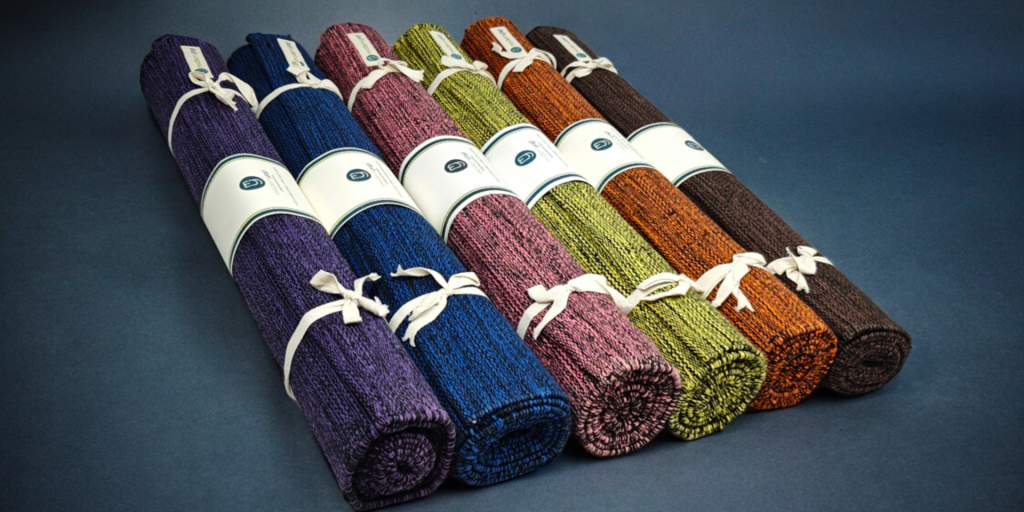
A thicker yoga mat is not a more comfortable one, and the assumption that more foam means more support is the reason so many mats end up in a cupboard. Thickness buys cushioning and costs stability, and the exchange rate is steeper than the numbers suggest.
Six millimetres, 10 mm, and 15 mm are the three common bands, and they behave like three different pieces of equipment rather than three versions of one. The differences show up in standing balance, in kneeling work, in how the mat interacts with the floor beneath it, and in whether the mat survives being rolled and unrolled every day.
The comparison below treats thickness as a mechanical variable rather than a comfort setting. It covers what each band does to stability, where each one is the correct choice, and the surface conditions that can invert the obvious answer.
Thickness Is a Stability Trade
A mat is a compliant layer between the body and the floor, and compliance always reduces the information the foot receives. The thicker the layer, the more the surface deforms under load, and the more the ankle and knee have to work to find a stable position. That is the whole trade in one sentence.
For standing poses and single-leg work, the deformation is the problem. For kneeling, seated, and supine work, the same deformation is the solution, because it spreads pressure away from knees, hips, and the spine. The right thickness depends on which of those two situations dominates your practice.
Six Millimetres: The Balance Point
Six millimetres is thick enough to take the edge off a hard floor and thin enough that balance work still feels like balance work. It is the default for a reason: most general practice mixes standing and floor work, and this band is the least bad compromise between the two.
It is also the band that travels best. It rolls tightly, it weighs little, and it lies flat quickly after unrolling. If the mat lives in a bag or gets moved twice a day, that practical property matters more than a millimetre of cushioning that only shows up in one pose.
Ten Millimetres: Cushion With a Cost
Ten millimetres is where the mat starts to feel like a pad. Knees and wrists stop complaining, seated forward folds become tolerable, and long supine work stops producing pressure points. For anyone with sensitive joints or a hard floor, this is a meaningful improvement rather than a marginal one.
The cost appears in any pose where one foot carries the load. Balance becomes noticeably vaguer, and the ankle has to search for the floor through the foam. For a practice built around standing sequences, 10 mm is usually too much; for a practice built around floor work, it is often just right.
Fifteen Millimetres: Where It Works
Fifteen millimetres is not a yoga mat in the traditional sense; it is a floor pad that can be used for stretching. It works for supine work, for rehabilitation-style exercise, for abdominal work, and for anyone who finds a hard floor genuinely painful to lie on for 20 minutes.
It also works as a base layer under a thinner mat, which is a common arrangement in home setups where the floor is concrete or tile. The thick pad absorbs the hardness of the surface and the thin mat provides the stability, which is a better solution than trying to find one mat that does both.
Where Fifteen Millimetres Fails
It fails in every standing balance pose, and it fails worse than people expect. On a 15 mm surface, the ankle joint has to correct for a moving platform, which increases sway and makes single-leg work feel unstable rather than supported. That is not a technique problem; it is the mat doing its job badly for that task.
It also fails in transitions and in any movement with quick direction changes. The foam compresses unevenly, the edges curl, and the mat slides against smooth floors. A thick mat on a polished surface is a genuine hazard, not a comfort upgrade.
The Floor Beneath Changes the Answer
Mat thickness is only half the system. On carpet, a 6 mm mat is usually enough because the carpet already provides compliance, and adding 15 mm produces a surface so soft that balance work becomes unreliable. On concrete or tile, the same 6 mm mat can feel like lying on the floor.
This is why mat recommendations rarely transfer between homes. The correct question is not which thickness is best but which thickness, on this floor, produces enough cushioning for the joints without turning standing work into a balance test.
Joint Comfort Versus Skill
There is a difference between a mat that protects a joint and a mat that hides a problem. Knee pain in kneeling poses is often a pressure issue that thickness solves. Wrist pain in weight-bearing poses is more often an angle and load issue that thickness only postpones.
Adding 6 mm to solve a wrist problem tends to work for a few weeks and then stop, because the underlying demand has not changed. Changing hand position, loading the wrist progressively, or reducing time in the pose addresses the cause rather than the symptom.
Grip, Density, and Durability
Thickness is the headline number, but density determines how the mat ages. A thick mat made of low-density foam compresses permanently within months, developing flat spots where the knees and hips sit. A thinner mat of higher density keeps its shape far longer.
Surface grip matters just as much for standing work, and it is independent of thickness. A textured top layer holds better when hands are slightly damp, which is the condition that matters in practice. Checking grip with a damp palm tells you more than the specification sheet.
Edge curl is the other durability signal, and it appears faster on thicker mats. A 15 mm mat stored rolled in a warm room keeps a memory of the curve, which produces a lip that catches the foot during standing work. Storing it flat solves the problem and takes floor space most homes do not have, while a thin mat recovers its shape within an hour.
Choosing by Practice, Not by Number
If the practice is mostly standing and balance-oriented, choose 6 mm and accept that knees may need a folded blanket in kneeling poses. If it is mostly floor-based stretching and rehabilitation, choose 10 mm or a 6 mm mat over a thick pad. If it is lying-down work on a hard floor, 15 mm is the honest answer.
The common mistake is buying the thickest mat for general use and then discovering that every standing pose feels worse. The second most common mistake is buying thin for portability and then avoiding floor work because it hurts, which removes half the practice.
Mat choice also interacts with what you do on the mat. Recovery-oriented sessions that stay close to the floor reward cushioning, while mobility sessions that move through standing positions reward stability, and the two pull in opposite directions.
That tension between support and feedback recurs in every piece of recovery equipment, from the mat under your feet to the roller you use on your calf. Recognising it is more useful than memorising which thickness is currently recommended.