Mirrors in a Home Gym: Position, Purpose and Cost
 6 min read
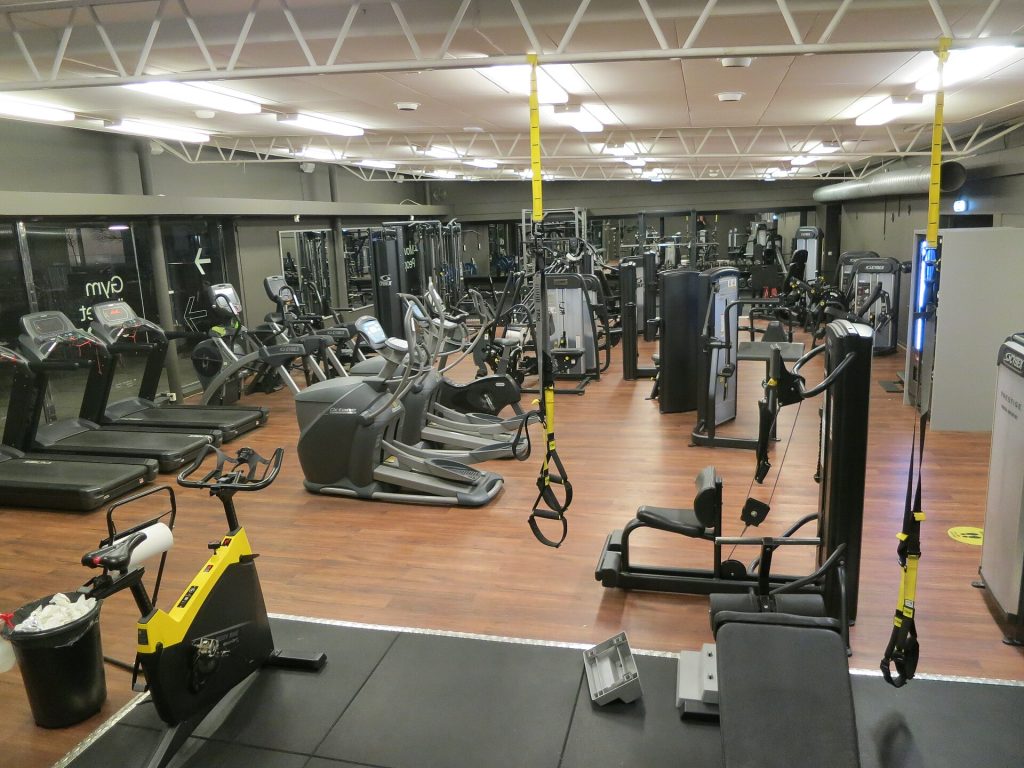
A mirror does not correct a squat. It shows a view, and the view is only as useful as the angle it is taken from, which in most home gyms is the wrong one. The correction still has to happen inside the lifter.
The usual argument for a mirror is form checking, and the usual reason one gets installed is vanity. Both can be true at once, and neither is a good reason to give up a wall without counting what that wall was already doing.
What follows compares the front view, the side view, the camera and no mirror at all. The question for each is what it can actually show, what it costs in wall space, and what happens when a barbell is dropped nearby.
What a Mirror Can and Cannot Show
A mirror shows position at a moment, not movement over time. It is good at revealing asymmetry, a shoulder higher than the other or a stance wider than it feels, and poor at showing a bar path that drifts across a second.
It also shows a reversed image, which inverts left and right. That is harmless for symmetry checks and confusing for anything involving a cue about a side, which is most of the language used in coaching.
The deeper limit is attention. Looking at a mirror during a heavy set takes attention away from the set, and attention is the scarcest resource in a room where nobody else is watching you lift.
Front Views Flatter, Side Views Inform
A mirror on the wall in front of a rack gives a front view of a squat, which is the least informative angle. Depth, knee travel and spinal position are all hidden by the body, and the image rewards a lifter for standing symmetrically.
The side view shows what matters: bar over midfoot, hips and shoulders rising together, the depth actually reached. It requires a mirror at right angles to the rack, which is usually the wall the plates were going to hang on.
A side mirror also exposes the room. It reflects the pile of plates, the fan and the door, and a mirror that shows clutter stops being used for checking within about a week. Clutter is not a moral failing in a garage; it is simply what a mirror doubles.
Sight Lines Decide Placement
The useful placement rule is that the mirror should be where you already look. For most people that is straight ahead at the bottom of a squat, or at eye level while lying on a bench, not across the room at an angle.
Angled mirrors create distortion that is hard to notice and easy to trust. A mirror set at 30 degrees to the rack shows a version of the lift that is neither front nor side, and the eye reads it as accurate.
Height matters as much as direction. A mirror whose top edge sits at knee level is useless standing and useful benching, while one mounted at standing eye level shows nothing of the floor, which is where the feet are.
The Wall You Give Up
A mirror wall consumes a surface that storage wants. Plates hang, bands hang, and a rack can be bolted to a wall, so a full-height mirror usually displaces something with a real functional claim on the same space.
The exception is a wall with no other use: behind a bench on a narrow side, or the wall a rack faces, which cannot hold storage because the bar path passes in front of it for the whole session.
Depth is a smaller cost. A surface-mounted mirror projects 20 to 30 mm and needs a frame or clips, while a recessed one costs wall work and cannot be removed. In a rented room only the first option exists.
Glass in a Room With Barbells
A mirror is a large sheet of glass at exactly the height where plates travel. Ordinary mirror glass breaks into long shards, and a bar that swings into a wall during a failed lift will find it.
Safety film or an acrylic sheet changes the failure mode. Acrylic is lighter and does not shatter, but it scratches, distorts slightly and hazes when cleaned, so it suits a secondary wall rather than a main one.
The cheap precaution is distance. A mirror set back beyond the bar’s landing zone, or above the height a plate can reach, removes most of the risk without changing anything else about the room. Both options cost nothing beyond a decision made before the fixings go in.
Cameras as the Cheaper Option
A phone on a tripod shows more than a mirror for less money. It records the whole movement, can be reviewed at any speed, and can be placed at the side, which is the angle that actually informs a decision about technique.
The cost is setup time and attention. A camera has to be positioned, framed and checked, and the footage has to be watched, which is a different habit from glancing at a wall between reps.
In a small room the camera also wins on space, because it folds away into a drawer. The mirror stays on the wall for years whether or not it is used, and that permanence is the real price.
Cheap Mirrors and Their Distortions
Thin mirror sheets sold for wardrobes bend when mounted, and a bent mirror produces a body that curves in the reflection. The distortion is subtle enough to be believed, which makes it worse than having no mirror.
Rigid backing solves it. A mirror bonded to a board or set in a frame keeps its plane, and the difference in cost is small compared with the cost of trusting a distorted image for a year.
Joints between panels are the other issue with cheap installations. A wall made of several sheets creates vertical lines that cut across the body, and those lines make it hard to judge whether a shoulder is level.
When a Mirror Is Just Decoration
There is nothing wrong with a mirror that exists to make a small room feel larger. That is a legitimate design goal, and a mirror achieves it more cheaply than any other single change to a wall.
The mistake is buying one for that reason and then defending it as a coaching tool. The two uses have different placement rules, and a mirror placed for spaciousness is usually in the wrong place for checking a lift.
Deciding which one you want first avoids the common outcome, which is a large mirror in a position that serves neither purpose well and cannot be moved without filling four holes in the plaster.
Where This Leads
Mirrors and lighting fail in the same way. Both are judged by how the room feels at first, and both are lived with for years, so the useful test is what they show rather than how they look.
Glare from a badly placed fitting is the next thing to notice. A mirror multiplies it, and a room with one bright bulb and one large reflection is harder to train in than a room with neither.