A Rower and a Fan Bike Do Not Train the Same Twenty Minutes
 6 min read
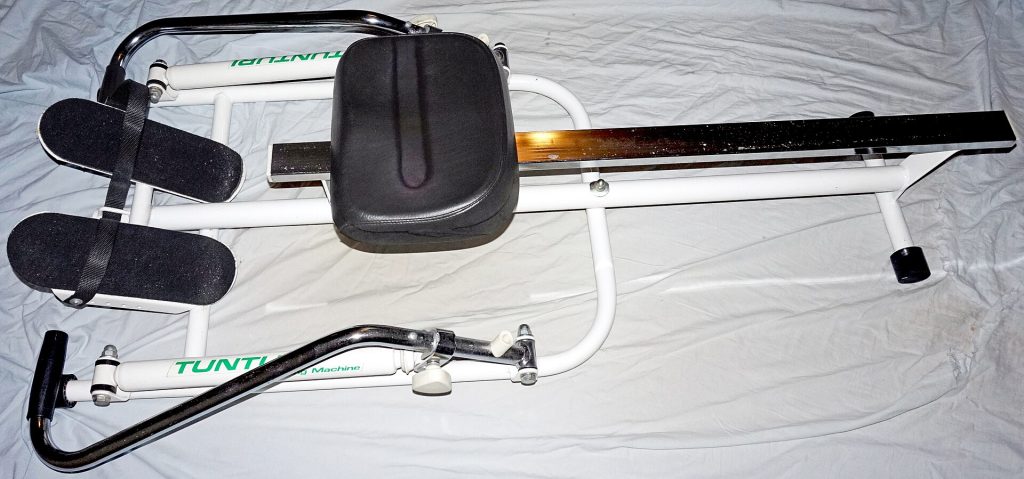
Twenty minutes of intervals is twenty minutes of intervals, or so the shopping logic goes. The machine is treated as a delivery vehicle for effort, and effort is assumed to be the only variable that changes the result. That assumption survives about one session on each machine.
A rower and a fan bike both let a reasonably fit person work hard for twenty minutes, and both leave that person on the floor afterward. What differs is the shape of the work: how many muscle groups contribute, how resistance arrives, where fatigue accumulates first, and how much skill stands between the athlete and the effort they intended.
Those four differences decide which machine suits which goal, and they are wider than the product copy suggests. The comparison below takes eight dimensions in turn and notes where the usual advice flips.
The Muscle Mass Each Machine Recruits
A rower asks for a leg push, a trunk swing, and an arm pull in that sequence. At steady pace roughly 60 percent of the work comes from the legs, with the hips and upper back adding much of the rest and the arms finishing the stroke. The fan bike asks for hip and knee extension plus a simultaneous arm push and pull.
That makes the fan bike forgiving of poor sequencing, because the arms can carry effort when the legs fade. The rower punishes it, because a mistimed stroke wastes the leg drive entirely. In interval work the difference shows up as different ceilings: the fan bike lets a tired athlete keep producing watts, while the rower does not.
Neither percentage survives a real session, though. Effort distributes itself toward whatever is weakest, so a rider with tired arms shifts the work to the legs no matter what the machine was designed to do.
Stroke Rate and Cadence as Separate Skills
On a rower, rate and power are distinct variables. Twenty-four strokes per minute can produce very different splits depending on how much force each stroke carries, and learning to add power at a fixed rate is the central skill of the machine. Beginners usually raise the rate instead, which feels harder and produces less.
The fan bike collapses that separation. Cadence and the fan’s own resistance both scale output, so pacing becomes a matter of picking a number and holding it. That is convenient for intervals, and it removes a layer of difficulty a rower would have taught.
Where the Limit Actually Comes From
Interval sessions end for one of three reasons: the heart and lungs run out, local muscular endurance fails, or technique degrades past usefulness. The rower tends to hit local endurance in the quadriceps and grip before breathing becomes the limiter, particularly in efforts under 90 seconds.
The fan bike pushes breathing harder at the same perceived effort, because the arm component adds demand without adding much mechanical efficiency. So twenty hard minutes on the fan bike usually ends in the chest, while twenty hard minutes on the rower usually ends in the legs and hands.
That distinction drives programming more than machine preference does. When the limiter is central, short intervals with generous recovery work well. When it is peripheral, the legs need moderate volume at a sustainable intensity before short hard efforts pay off.
Low-Back and Hip Load
The rower loads the spine in flexion, repeatedly, several hundred times in twenty minutes. With good sequencing that load stays modest, because the legs start the stroke and the back only transmits force. With the common fault of opening the back first, the load accumulates quickly and the session ends early.
A fan bike holds the trunk closer to neutral, although standing intervals reintroduce a hip hinge with arm drive. Someone with a history of disc irritation usually tolerates the bike better, not because it is safer in principle but because loaded flexion is not repeated hundreds of times.
Tolerance also drifts with fatigue. A stroke that is unremarkable at minute three becomes a loaded flexion repetition at minute eighteen, and that is where most complaints about the rower begin.
The Arm Drive and Its Cost
On a fan bike the arms are linked to the same resistance as the legs, so pushing harder with one forces the other to follow. The result is a global effort rather than a local one, which is why heart rate climbs so steeply in the first minute of a set.
The cost is that arm fatigue can end a session before the legs are finished, which makes the machine a poor choice for pure leg conditioning. The benefit is that a session feels complete at a shorter total duration, and that matters for anyone training on a tight schedule.
Skill Ceiling and Learning Cost
A rower takes perhaps five sessions to reach a stroke that will not hurt you, and perhaps fifty to reach one that is efficient. The gap matters because an inefficient stroke produces less power at the same perceived effort, so early interval numbers understate actual fitness.
The fan bike has almost no learning cost. Anyone can sit down and produce a maximum within a minute, which makes it useful for testing and useful for athletes who cannot spare practice time on technique. In a household where several people use the machine occasionally, that asymmetry is a real argument for the bike.
Noise and Household Tolerance
Fan bikes are loud in a specific way. Air resistance rises with speed, so hard intervals produce a roar that carries through doors and floors, and the noise scales with exactly the effort you care most about.
Rowers are quieter at the flywheel but produce a rhythmic chain and seat-rail sound, plus a low thump as the drive engages on each stroke. In a flat with neighbours below, that low-frequency thump travels further than the fan’s broadband roar, so a rower on a suspended timber floor can be the worse neighbour of the two.
Timing is the cheapest control available. The same session at seven in the evening draws fewer complaints than at six in the morning, and no accessory changes that calculation as much as scheduling does.
What Each Machine Leaves Untrained
Both are sagittal-plane tools. Neither asks for lateral stability, rotation under load, or much eccentric control, so a program built entirely on either produces a fit person with a narrow movement vocabulary.
The rower at least demands a hip hinge under fatigue, which carries over to lifting. The fan bike demands almost nothing technically, which is why it pairs cleanly with a strength program instead of competing with it. Treat both as ergometers for conditioning and the choice stops being tribal.
The practical question is not which machine is better but which one you will actually use at the intensity the plan requires. A rower that sits unused because the technique feels awkward is worse than a fan bike you mildly resent but ride twice a week.
From here the more useful problem is scheduling: how many hard sessions belong in a week, how they sit against lifting days, and how to keep the easy days genuinely easy. That question changes the answer more than the machine does.