Squat Stand, Half Rack, Folding Rack, and Independent Stand: Space and Safety
 7 min read
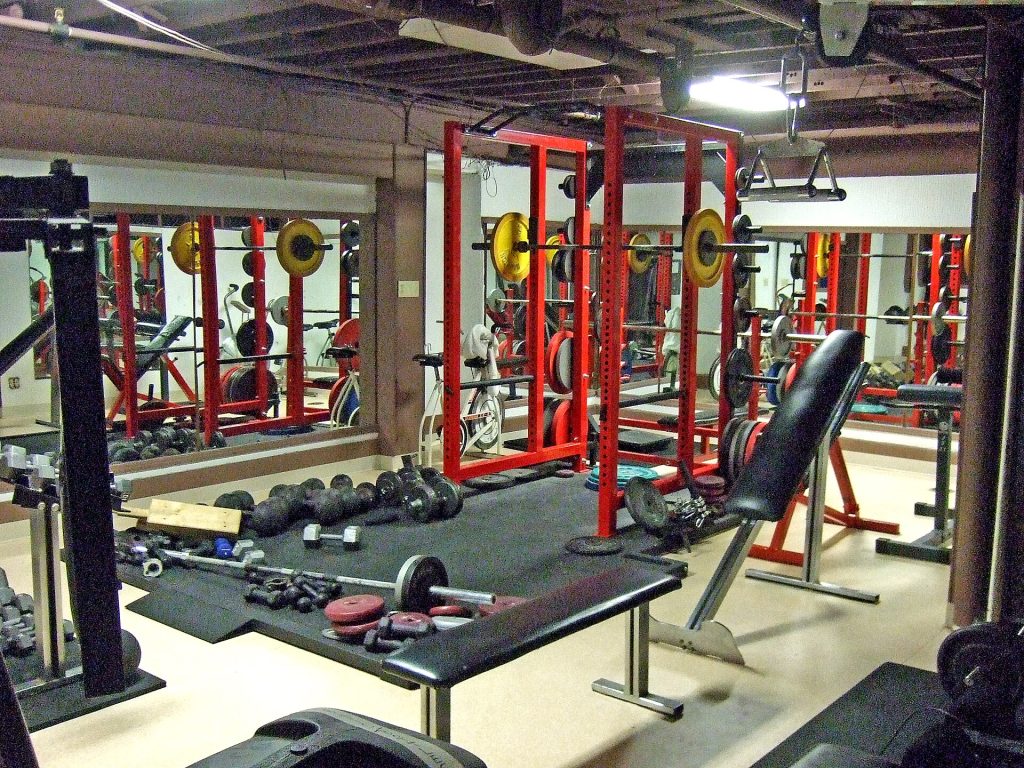
Rack shopping usually starts with the biggest frame the room can hold, on the assumption that more steel means more safety. The assumption is backwards. A rack only makes a lift safer if the safeties are set correctly and the frame does not move when a bar lands on them.
Four formats cover almost every home setup: the squat stand, the half rack, the folding rack, and the independent stand. They differ less in strength than in how much floor they claim, how they behave under a failed rep, and what they cost to set up every session.
What Each Frame Actually Restrains
A squat stand holds the bar at two points and nothing else. It provides no safeties unless you add them, so a failed squat has to be dumped forward or caught by the lifter. That is a skill, and it degrades when you are tired.
The difference between these formats is easiest to see at the moment a squat stalls. A stand gives the lifter nothing to push against, while any frame with rear uprights offers a place to dump the bar backward and step away. That option changes how hard you are willing to push.
A half rack adds a pair of uprights behind the lifter and usually accepts safety arms. A full rack encloses the bar on four posts. The folding and independent designs sit between these, and what they restrain depends entirely on which accessories were fitted at purchase.
Footprint and Ceiling Height
A squat stand needs roughly 1.2 m by 1.2 m and can be pushed aside. A half rack needs about 1.5 m of depth once safeties are attached, and a full rack wants 2 m or more including the bar. Those numbers assume the bar is loaded evenly on both sides.
Ceiling height is the constraint people forget. An overhead press needs bar height plus arm length plus clearance, and a rack with a pull-up bar on top can put the crossbar exactly where your head wants to be. Measure the press, not the squat.
Room shape matters as much as room size. A long narrow space favours a stand against one wall, while a square room allows a rack in the middle with loading room on both sides. Draw the loading path before buying anything.
Stability When a Rep Fails
Stability is a function of base width, mass, and how the frame is anchored. A light stand with a narrow footprint will walk or tip when a bar is dumped onto safeties attached at only two points. The frame survives; the geometry does not.
Bolting to the floor or bracing to a wall changes this more than any specification printed on the box. If you cannot drill, choose a frame with a wide base and enough mass that it stays put under an uneven load. Weighted feet are a partial substitute, not an equal one.
Check how the frame meets the floor. Flat feet spread load across a plate and are kinder to wooden floors, while posts with small contact patches concentrate force and mark anything softer than concrete. Both can be shimmed level afterwards.
Pull-Up Bars and Attachment Options
A rack is a frame for accessories, and the list grows with the number of uprights. A half rack usually supports a pull-up bar, dip arms, and plate storage, while a squat stand supports almost none of that. Accessories are often the real reason people buy a bigger frame.
Attachments are also where cost hides. A cheap frame with expensive proprietary fittings can end up costing more than a mid-priced rack that accepts standard hardware. Check the hole size and spacing before committing to a brand of frame.
Hole spacing runs from about 25 mm to 75 mm between settings. The finer figure matters for bench pressing, where a wide gap can leave the pins either too high to unrack or too low to catch. Measure your own arch and shoulder height first.
Assembly, Bolting, and Rental Floors
Assembly ranges from 20 minutes to a full afternoon, and the difference is usually the bolt count rather than the steel quality. A folding rack trades assembly time for setup time on every session, which is a worse trade than it sounds.
In a rental, bolting is often off the table, which rules out most folding designs and pushes the choice toward a stand with a weighted base or a rack braced against a wall without permanent fixings. Ask about the deposit before drilling anything.
Wall bracing is a middle option that gets overlooked. A pair of angled struts spreads load into the studs without a floor fixing, and it keeps a tall frame from rocking during a heavy set. It also survives a move.
Folding Racks and the Daily Setup Cost
A folding rack buys floor space by charging time. Unfolding, pinning, and loading takes a few minutes at the start and the same at the end, and that cost repeats every session without exception. It is a subscription paid in minutes.
The design is worth it when the room must serve another purpose and the alternative is not training at all. It is a poor choice when the room is already a gym and the folding is pure ceremony. Frequency of use decides whether the trade pays off.
Frequency also decides whether a folding rack survives its first year. A design used twice a week gets folded properly, while one used daily tends to stay open, at which point the space saving has been paid for and lost.
Independent Stands and the Spotting Question
Two separate stands give the most flexible width and the least stability, and they offer no safeties at all. They suit lifters who always have a spotter or who only bench inside a dedicated bench frame. Used alone and heavy, they ask a lot of the lifter.
Their advantage is adjustability: the uprights can be moved to match grip width, which matters for bench pressing in a way fixed racks do not accommodate as well. That width flexibility is worth more to long-armed lifters than to most others.
Width adjustment is less useful than it sounds for squats, where the stands rarely move once set. For bench pressing, narrowing the uprights to match the grip is the difference between a safe unrack and an awkward one.
Price Bands and What They Buy
The cheapest stands buy adequate steel and no safeties. The middle band buys a half rack with arms and a pull-up bar, which is the best value for most home lifters. The top band buys depth, thicker steel, and a hole spacing that supports fine height adjustment.
Fine hole spacing matters more than most buyers expect, because safety height is set in increments and coarse spacing forces a compromise between catching the bar and getting under it. That single dimension separates a rack that protects you from one that only looks like it would.
Steel gauge matters less than most buyers assume at this scale. A 2 mm frame is strong enough for any home load, and the step to 3 mm buys stiffness rather than safety. Stiffness is worth paying for only if you notice the flex.
Safety height is the subject of its own comparison, and it is worth reading before deciding how much rack to buy. A frame is only as protective as the pins hanging from it.
Frame choice sets the limits of everything that follows, including which safeties you can fit and how precisely they can be placed under a failed rep.